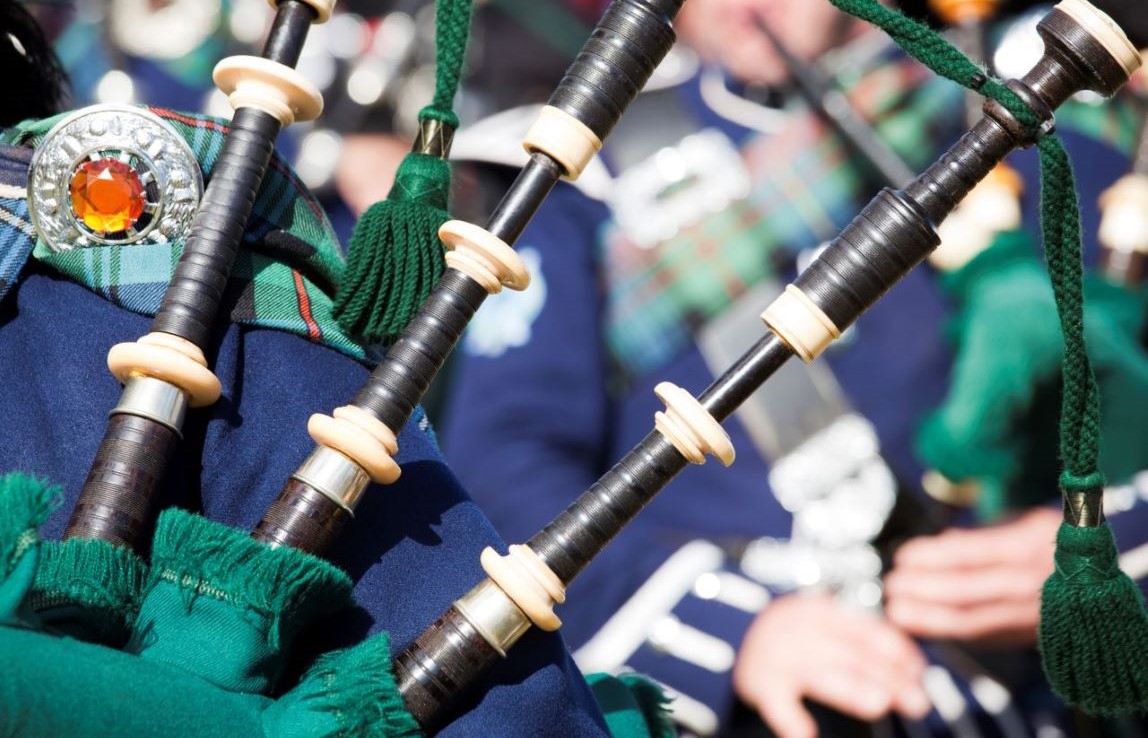
Bagpipes are most commonly associated with traditional Celtic music, particularly in the form of folk tunes and ceremonial events. However, their unique, evocative sound has found a place beyond traditional settings. Over time, bagpipes have been integrated into more diverse musical forms, including symphony orchestras. This blend of ancient tradition with modern performance requires both technical skill and historical awareness, especially when adapting instruments like Tyrone Heade’s century-old R.G. Lawrie bagpipes for modern symphony performances.
A Family Heirloom with Historical Significance
Tyrone’s bagpipes, handed down from his grandfather, are over a hundred years old. These pipes were made by the renowned R.G. Lawrie firm around 1900 and carry with them a rich family legacy. Tyrone’s grandfather, Nicholas Patrick Heade, used these very pipes in various performances, including a memorable appearance at a 1924 St. Patrick’s Day celebration. This deep connection to family and tradition adds immense sentimental value to the instrument, making their use in contemporary settings a labor of both love and respect for the past.
However, bringing an instrument of this age into the modern musical world is no simple task. The tonal character and pitch of bagpipes have evolved over time, and adapting these older instruments for symphony orchestras requires precise adjustments.
The Challenge of Concert Pitch
One of the biggest challenges Tyrone faced when adapting his grandfather’s bagpipes for symphony performances was achieving concert pitch. Traditionally, the Great Highland Bagpipe has a different tonal structure from modern Western instruments, which are tuned to A440, a standard pitch for orchestras. In contrast, bagpipes often operate at a higher pitch, particularly modern pipes which are tuned to A480 or higher to meet contemporary piping standards.
To align his pipes with the symphony orchestra’s tuning, Tyrone had to lower the pitch of his grandfather’s pipes from A480 to A440. This process took over 25 hours of meticulous adjustments. It involved extending the drones, choosing the right combination of reeds, and fine-tuning the chanter, the heart of the bagpipe’s melody.
The A440 pitch not only allows for perfect synchronization with the orchestra’s strings, brass, and percussion but also ensures that the bagpipe maintains its powerful, resonant tone while blending seamlessly with other instruments.
Preserving Tradition While Embracing Modernity
One of the most fascinating aspects of this adaptation process is the balance between preserving the bagpipes’ traditional sound and embracing modern musical requirements. Tyrone’s adjustments did not alter the inherent timbre or historical value of the pipes. Instead, they allowed the instrument to perform in new and unexpected settings, such as symphony concerts, while maintaining its rich, full-bodied tone.
Tyrone first undertook this task in 2014 for a performance with the Yakima Symphony Orchestra. He performed Peter Maxwell Davies’ composition, “An Orkney Wedding, with Sunrise,” which famously features a bagpiper in its finale. His pipes, modified for A440 concert pitch, seamlessly blended with the symphonic instruments, creating a captivating fusion of tradition and modernity.
In 2019, Tyrone performed the same piece with the Skagit Symphony, once again demonstrating how the versatility of the bagpipe, when properly adapted, can contribute to the rich, multi-layered textures of orchestral music.
A Symbol of Cultural Continuity
Tyrone’s adaptation of his grandfather’s bagpipes is more than just a technical achievement—it symbolizes cultural continuity. By ensuring these historic pipes can be heard in modern settings, Tyrone keeps his family’s traditions alive while also introducing new audiences to the powerful sound of the bagpipe.
This blend of past and present is a testament to the enduring nature of bagpipe music. As the instrument continues to evolve, its historical roots remain, offering both performers and audiences a deeper connection to its rich cultural heritage.
Conclusion
Adapting bagpipes for symphony performances, as Tyrone Heade has done with his grandfather’s 1900 Lawrie pipes, showcases the remarkable versatility of this iconic instrument. By aligning the bagpipes to modern concert pitch while preserving their authentic sound, Tyrone has brought a century-old tradition into the contemporary musical world, ensuring that the voice of the bagpipe continues to resonate in new and exciting ways.